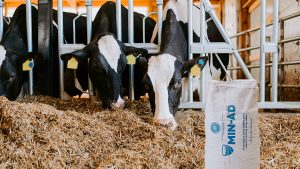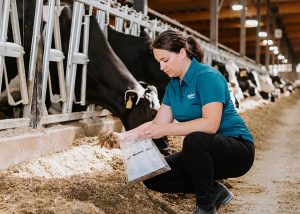
Gut damage is a challenge on many dairy farms that can lead to poor cow health and productivity. Feed additives are one tool that can be used to help prevent and overcome gut health challenges. However, there is a lot of confusion around the different types of additives, how they work, and how to best use them. As a result, additives are put into cow rations that may or may not always be the most effective or economical for individual herd needs.
In this webinar, Dr. Devan Paulus Compart, Papillon Technical Services Manager, reviews the symptoms of gut dysbiosis and how additives can be used as a tool to overcome those challenges, and finally help producers and nutritionists develop an additive strategy that will be most effective and economical for every individual herd.
What You’ll Learn:
- How to identify gut health challenges in your herd and how they impact cow health and productivity.
- The primary categories of feed additives and how they work to solve gut health challenges.
- How to build a customized feed additive program that is effective, easy and economical.
Meet Dr. Devan Paulus Compart
Dr. Devan Paulus Compart has an extensive background in animal nutrition and experience in research and development. Her expertise is in the use of feed additives, such as prebiotics, probiotics, and plant compounds, to support ruminant health and performance and support sustainable livestock production.
Dr. Paulus Compart works as a Technical Services Manager with Papillon Agricultural Company, where she supports nutritionists and producers to improve cow health, productivity, and efficiency using on-farm support tools and comprehensive feed additive programs.
Dr. Paulus Compart previously served as Evonik’s North America Ruminant Business Development Manager and Ruminant Feed Additive R&D and Technical Service Lead at Land O’Lakes.
Paulus Compart received her bachelor’s degree in animal science from the University of California, Davis. Her master’s and PhD are both in animal science from the University of Minnesota. She is the co-founder and leader of Ag Women Grow, a program that supports career growth for women in the agriculture industry.