On the go and want to download this PAC Fact for later?
Prebiotics are non-viable food components that benefit the animal when consumed. Common prebiotics used in ruminant diets include yeast extract (yeast cell wall) and yeast culture.
How does yeast cell wall work?
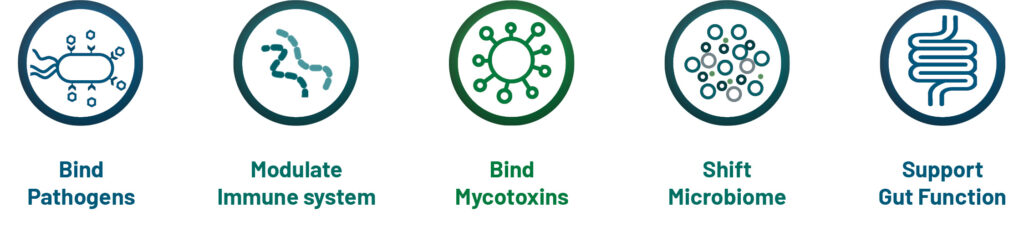
Yeast cell walls are made up of a few key components including mannan oligosaccharides (MOS) and beta-glucans. MOS are important for binding pathogens while beta-glucans are primarily involved in modulating the immune system. Yeast cell walls also benefit the animal through secondary mechanisms such as binding mycotoxins, shifting the microbiome, and supporting gut function.
How does yeast culture work?
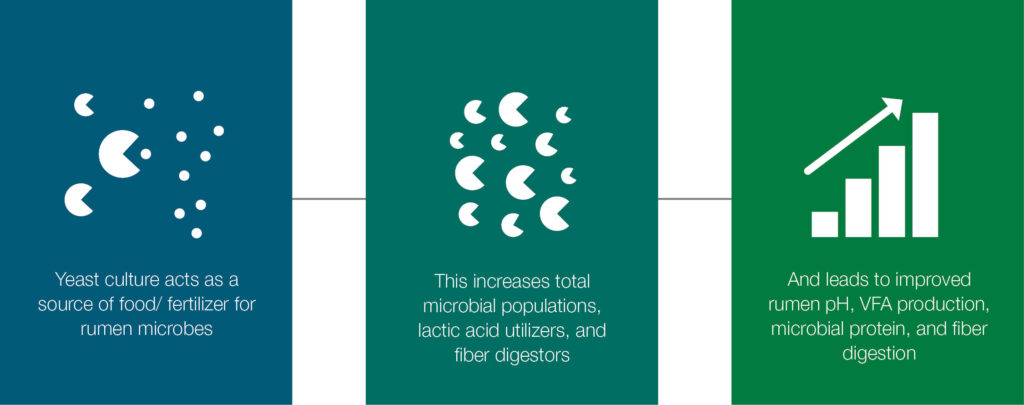
Yeast culture consists of yeast cells and the medium on which they are grown. When consumed by the animal, yeast culture acts as a source of growth factors for rumen microbes.
When should prebiotics be used?
Pathogen control. Yeast cell wall helps control pathogens like E. Coli and Salmonella in the gut that can induce diarrhea.
Periods of stress. Yeast cell wall and yeast culture boost the immune system and help increase dry matter intake during stress such as heat stress, transportation, co-mingling, illness, or disease.
To support general health. Yeast cell wall and yeast culture support rumen health, immune function, and digestion for overall better performance.
What are typical responses?
Calves:
- Improved growth
- Reduction in duration and severity of scours
- Early establishment of rumen microbiome and development of rumen papillae
Dairy Cattle:
- Improved antibody transfer to calves
- Improved milk and component yield
- Increased dry matter intake in early lactation
Beef Cattle:
- Reduced incidence and severity of disease especially on feedlot arrival
- Improved growth and average daily gain
- Increased dry matter intake
To learn more about our customizable solutions or to see how we can help you find the best way forward, contact us.